AWS Net Worth: The Cloud Empire’s Hidden Financial Power
The Cloud That Powers the World—And Its Billion-Dollar Secret
In the sprawling digital landscape where data centers hum with unseen energy and algorithms dictate global commerce, one name dominates: AWS net worth. It’s not just a number—it’s a testament to how Amazon Web Services, a division of the retail giant, has quietly amassed a financial empire larger than most nations’ GDPs. While Jeff Bezos’ name graces headlines for space rockets and grocery stores, AWS operates in the shadows, where every second of uptime translates to billions in revenue. Its AWS net worth isn’t just a metric; it’s a barometer of the cloud computing revolution, where infrastructure becomes currency and scalability redefines industry power.
The story of AWS net worth begins not in Silicon Valley boardrooms but in the late 2000s, when Amazon, flush with cash from its e-commerce dominance, bet everything on a radical idea: renting out server space to the world. What started as an internal tool to manage Amazon’s own operations morphed into a global utility, now handling everything from Netflix’s streaming to NASA’s space missions. Today, AWS net worth is a moving target—one that grows by the day as enterprises migrate en masse to the cloud. But how did a side project for a book retailer become the most valuable cloud platform on Earth? The answer lies in its relentless innovation, strategic acquisitions, and an almost monopoly-like grip on the market.
Yet, for all its dominance, AWS net worth remains a closely guarded secret. Amazon’s financial disclosures lump AWS revenue into broader segments, forcing analysts to play detective with earnings calls and industry reports. The result? A cloud of speculation around the exact figure, where estimates range from $100 billion to over $200 billion in standalone valuation. What’s clear is this: AWS net worth isn’t just about dollars—it’s about influence. It shapes geopolitics (as governments debate data sovereignty), redefines cybersecurity, and even fuels AI’s next frontier. To understand its true scale, we must peel back the layers: from its humble beginnings to its current stranglehold on the market, and what the future holds for the cloud empire that’s rewriting the rules of technology.
The Complete Overview
Historical Background and Evolution
Amazon Web Services was officially launched in March 2006, though its origins trace back to 2002, when Amazon began using internal grid computing to manage its burgeoning e-commerce operations. The idea was simple: instead of letting servers sit idle, why not monetize the excess capacity? By 2006, AWS was born as Elastic Compute Cloud (EC2), offering virtual servers on demand—a radical departure from traditional IT infrastructure.
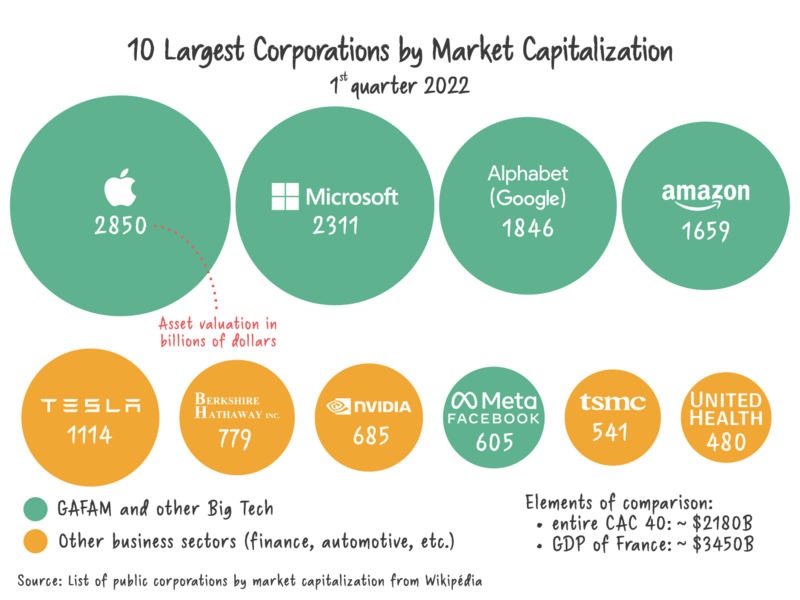
The early years were marked by skepticism. Competitors like Microsoft Azure and Google Cloud didn’t yet exist, and enterprises were wary of trusting their data to a company best known for selling books. But AWS’s net worth trajectory changed everything. By 2010, it had cracked the $1 billion annual revenue mark. A decade later, in 2020, AWS surpassed $45 billion in revenue, accounting for over 13% of Amazon’s total revenue—a figure that would make it the 10th largest public company in the world if standalone.
Key milestones in AWS net worth growth:
- 2011: AWS introduced Simple Storage Service (S3), revolutionizing cloud storage.
- 2014: AWS revenue hit $7.9 billion, surpassing IBM’s SoftLayer.
- 2017: AWS’s net worth equivalent (if spun off) was estimated at $150 billion+ by Morgan Stanley.
- 2023: AWS’s annual revenue exceeded $90 billion, with $20+ billion in operating income—a margin most tech giants envy.
Core Mechanisms: How It Works
AWS’s business model is a masterclass in subscription economics. Unlike traditional IT, where companies buy hardware upfront, AWS operates on a pay-as-you-go model. Users rent computing power, storage, and databases by the hour or minute, with costs scaling dynamically. This utility computing approach has three pillars:
- Global Infrastructure: AWS operates 105 Availability Zones across 33 geographic regions, with plans to expand to 12 more by 2025. This global footprint ensures low latency and high reliability, critical for enterprises.
- Differentiated Services: Beyond basic compute and storage, AWS offers AI/ML tools (SageMaker), serverless computing (Lambda), and enterprise-grade security (IAM, KMS). These high-margin services drive AWS net worth upward.
- Ecosystem Lock-in: Once a company migrates to AWS, switching costs are prohibitive. Services like Amazon RDS (databases) and Elastic Beanstalk (PaaS) create dependencies that lock customers in, boosting AWS net worth through recurring revenue.
Key Benefits and Impact
"AWS didn’t just invent cloud computing—it turned infrastructure into a commodity, then built a moat so wide that competitors can’t cross it without losing billions." — Mary Meeker (former Morgan Stanley analyst)
Major Advantages
The AWS net worth phenomenon isn’t just about revenue—it’s about economic and technological dominance. Here’s why AWS leads:
- Unmatched Scale and Reliability
- First-Mover Advantage and Network Effects
- Vertical Integration and Cost Synergies
- Government and Defense Contracts
- Acquisition Strategy as a Growth Engine
Comparative Analysis
| Metric | AWS Net Worth (Est.) | Microsoft Azure | Google Cloud | Alibaba Cloud |
|---|---|---|---|---|
| Market Share (2023) | 31% | 22% | 10% | 5% (Asia-focused) |
| Annual Revenue (2023) | ~$90B+ | ~$25B | ~$30B | ~$10B |
| Operating Margin | ~20-25% | ~30-35% (highest) | ~15-20% | ~10-15% |
| Key Differentiator | Global reach, AI/ML depth | Enterprise integration (Office 365) | AI/ML (TensorFlow, Vertex) | Cost leadership in Asia |
Future Trends
The AWS net worth story isn’t static. Three trends will shape its trajectory:
- AI and Machine Learning as the Next Revenue Driver
- Sovereign Cloud and Geopolitical Expansion
- Serverless and Edge Computing
- Cost Optimization and Competitive Pressure
Conclusion
The AWS net worth isn’t just a financial figure—it’s a reflection of how cloud computing has become the backbone of the digital economy. From its humble beginnings as an internal tool to its current $90B+ annual revenue, AWS has redefined what it means to own infrastructure. Its market dominance, strategic acquisitions, and relentless innovation ensure that AWS net worth will only grow, even as competitors close the gap.
Yet, the real story isn’t just about the numbers. It’s about how AWS has turned a once-niche tech service into a global utility, one that powers everything from e-commerce to space exploration. As AI, quantum computing, and edge networks emerge, AWS net worth will continue to be a bellwether for the tech industry—proof that in the cloud era, scale isn’t just an advantage; it’s the only game in town.
Comprehensive FAQs
Q: What is the exact AWS net worth?
AWS’s net worth isn’t publicly disclosed, but analysts estimate its standalone valuation between $150B–$250B based on revenue multiples. If spun off, it would rank among the top 10 most valuable tech companies. Amazon’s 2023 financials show AWS contributing ~$90B in revenue (13% of total), with $20B+ in operating income.
Q: How does AWS net worth compare to other cloud providers?
AWS’s net worth equivalent dwarfs competitors:
- Microsoft Azure: ~$100B valuation (higher margins but smaller revenue).
- Google Cloud: ~$50B valuation (strong in AI but limited scale).
- Alibaba Cloud: ~$30B (regional dominance in Asia).
Q: Can AWS net worth be calculated independently?
No—Amazon doesn’t break out AWS’s net income separately. However, revenue and operating income are reported, allowing estimates. For example:
- 2023 AWS Revenue: ~$90B
- Operating Income: ~$20B
- Implied Valuation (using S&P 500 tech multiples): ~$180B–$220B.
Q: What are the biggest threats to AWS net worth?
- Regulatory Scrutiny: Antitrust concerns (e.g., EU’s Digital Markets Act) could force AWS to divest services.
- Competitor Innovation: Azure’s enterprise focus and Google’s AI leadership threaten AWS’s dominance.
- Cost Sensitivity: Enterprises may shift to multi-cloud strategies to avoid vendor lock-in.
- Cybersecurity Risks: A major breach could erode trust and AWS net worth.
Q: How does AWS net worth affect Amazon’s overall valuation?
AWS is Amazon’s most profitable segment, contributing ~50% of its operating income. A 1% drop in AWS revenue could reduce Amazon’s market cap by $10B+. Investors price Amazon’s stock heavily on AWS growth, making its net worth a critical driver of Amazon’s valuation.
Q: Will AWS ever spin off to unlock more net worth?
Unlikely. Amazon’s leadership has rejected spin-off talks (despite activist investor pressure in 2021). The synergy between AWS and Amazon’s retail/AI data is too valuable. However, partial spin-offs (e.g., AWS as a separate entity with Amazon stock) could unlock $100B+ in shareholder value without full separation.
Q: How does AWS net worth influence global cloud pricing?
AWS’s scale allows it to absorb R&D costs, passing savings to customers. However, its dominant market position has led to price wars (e.g., Google Cloud’s aggressive discounts). AWS’s net worth gives it pricing power, but competitors use it to challenge AWS’s margins.
